

When visitors step into Old Towne Creek County Park, they'll find more than scenic trails, marsh views, and centuries of history. Weaved into the park’s landscape is the newly established Ashem Arboretum, a collection of 29 distinct tree species that are individually identified. The arboretum is one of only nine accredited Level 1 arboretums in South Carolina.
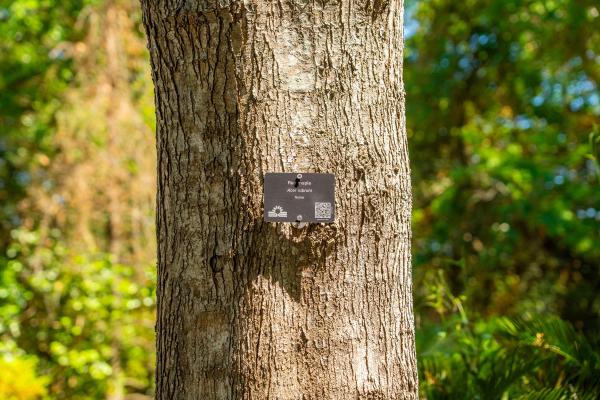
Visitors looking to learn more about the trees around them can simply pull out their phone. Each tagged specimen includes a QR code that links directly to information about that specific species, including its common name, scientific name, and additional educational resources.
Planning and Development Aide Paul Genegrasso played an integral role in the development of the arboretum.
“The oak allée at the pedestrian entrance is absolutely breathtaking and the perfect place to see several beautiful oak specimens as well as other species,” he said. “Standouts include several impressive live oaks and other beautiful native trees as well as a large collection of mature camellias and azaleas planted by the park’s prior owners Emily Ravenel Farrow and her mother Emily Simmons Ravenel.
The arboretum signage also identifies trees as native, non-native ornamental, or non-native invasive, helping visitors better understand the role different species play within the landscape and providing useful knowledge they can apply in their own gardens.
Working in tandem with the arboretum signage are numerous interpretive wayside panels which speak to both the park’s natural and cultural history. "The arboretum and interpretive wayside panels really allows us to keep the important horticultural history of the site intact," Genegrasso said. 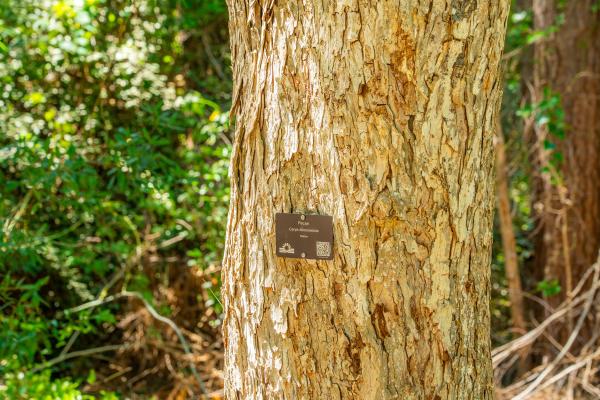
Creating the arboretum required years of planning and careful field work. Members of Charleston County Parks' Planning and Development Division first walked the property several years ago, identifying and mapping tree species they believed would make strong additions to the arboretum collection.
"We then came back and selected the healthiest and most representative specimens from across the landscape,” Genegrasso said. “While approximately 60 trees were initially evaluated, the final collection was narrowed to 29 trees that now feature the identification tags and educational information. There were a wide range of beautiful tree specimens across the board."
The collection not only highlights the diversity of the property but also showcases some of the best examples of each species found within the park.
Even the signs themselves were designed with long-term stewardship in mind, using spring-loaded hardware that allows the trees to continue growing without being damaged.
“The springs are there to allow the tree to grow,” Genegrasso said. “Often times you see something screwed into a tree or wrapped around it and the tree will start to grow out and you can’t remove it if you need to. So as the tree grows it will just compress the spring. Our plan is maybe once a year to walk the arboretum and see how compressed the signs are and just loosen the screws as needed.”
The arboretum reflects Charleston County Parks' ongoing commitment to conservation, interpretation, and stewardship. Its accreditation required at least 25 different tree species, and with 29 represented throughout the collection, the arboretum has already surpassed the requirements for Level 1 status.
The Charleston County Parks Planning And Development Division is already looking ahead to expand the status of the arboretum to Level 2 and Level 3 status requiring additional species, programming and educational efforts.
At the park's grand opening on June 30, a Community Tree (A Live Oak) was planted, symbolizing the growth and future of this new public space. As visitors explore Old Towne Creek County Park, the Ashem Arboretum offers an invitation to slow down, look up, and discover the remarkable stories growing all around them.
“Part of the point of the arboretum is education,” Genegrasso said. “A few of these trees have really distinct characteristics so if you stop, look, and read, you can really start picking those characteristics up and identifying them yourself.”