

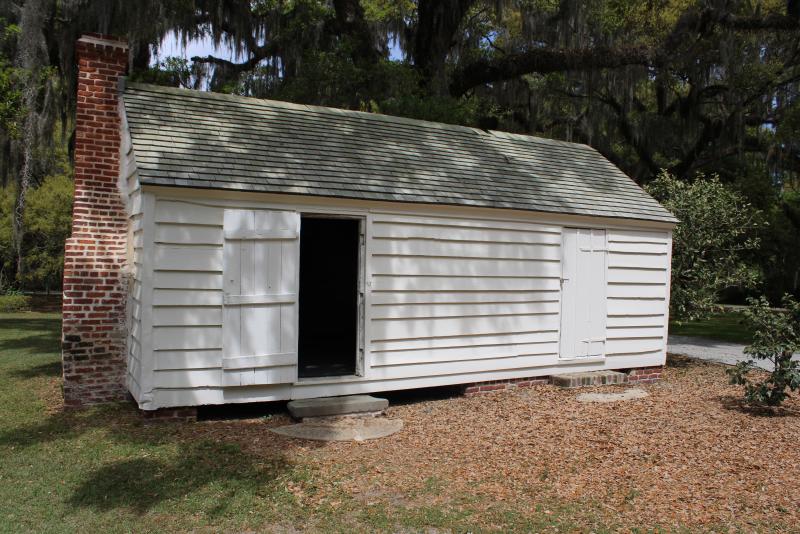
Visitors to McLeod Plantation Historic Site now have a new opportunity to step deeper into the layered history of the property. Following a recent stabilization effort, the site’s historic dairy building is now open for walkthroughs, offering guests a closer look into what life was like on the site throughout its history.
While much remains unknown about its exact use over time, the opening marks an important step in both preservation and interpretation.
Like many of the buildings at McLeod Plantation Historic Site, it holds a complex story shaped by generations of change. Archaeological and architectural evidence suggests that portions of the structure date back to the late 18th or early 19th century, with later modifications layered on throughout the 19th and 20th centuries.
At the heart of the building’s story is its foundation. Archeological excavations revealed that beneath the brick structure lies Bermuda stone, a material imported to Charleston during the colonial period but rarely documented in settings like James Island which was considered rural during the time the building was constructed. This discovery alone hints that the site may have been in use even before the McLeod family acquired the property in 1851, adding another dimension to the plantation’s already deep historical timeline.
The building’s physical features offer clues, but not definitive answers, about its original purpose. A cool cellar space, e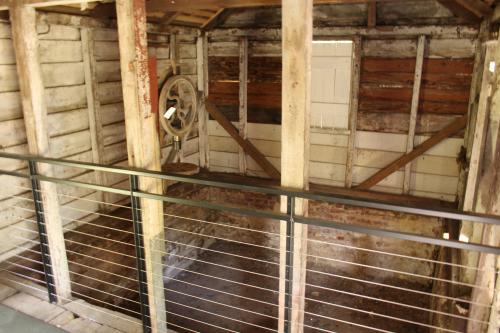 vidence of stucco on interior surfaces, and the divided layout suggest it may have functioned as a dairy or cold storage facility. Yet the presence of a chimney, unusual for a traditional dairy, complicates that interpretation, pointing to the possibility that the structure served multiple roles over time.
Historical accounts and architectural analysis help fill in some of these gaps, but they also reinforce how much is still unknown.
“There is a very general overview of how this space could have functioned,” Cultural History Interpretation Coordinator Georgette Rivera said. “But from a specific standpoint, we need to do more research.”
What is clear, however, is that the building did not remain static. Evidence of repairs, reused materials, and structural changes, particularly in the 20th century, show that it evolved alongside the people who lived and worked on the property. Artifacts recovered during archaeological work, including ceramics, further support the idea that this space has been continuously adapted over time.
The recent stabilization project was a critical step in making the building accessible to the public. By reinforcing structural elements and preserving key historic features, the work ensured that visitors can safely enter the space while maintaining its historical integrity.
Opening the dairy also creates new opportunities for interpretation. Instead of viewing the building from the outside, guests can now experience its scale, materials, and atmosphere firsthand. This physical connection helps bring the past into sharper focus and encourages deeper questions about how the space was used and by whom.
Those questions are central to the ongoing work at McLeod Plantation Historic Site. Beyond bricks and mortar, the site is committed to exploring the human stories tied to its landscape.
“I’m interested to know more about the people who built the space, who inhabited the space, and all of the stories that are within those bricks,” Rivera said. “The dairy building, like the rest of the plantation, reflects the labor, lives, and experiences of both enslaved and free people whose histories continue to be uncovered.”
The opening of the dairy building is not the end of the story. Additional research, archaeological study, and interpretive planning will continue to shape our understanding of the structure. Future findings may confirm, challenge, or expand current theories about its use.
For now, the dairy stands as a powerful example of how preservation and research work hand-in-hand. Thanks to careful stabilization, visitors can now step inside a space that has stood for centuries, and one that still holds questions, invites reflection, and connects us to the many layers of McLeod Plantation Historic Site’s past.