

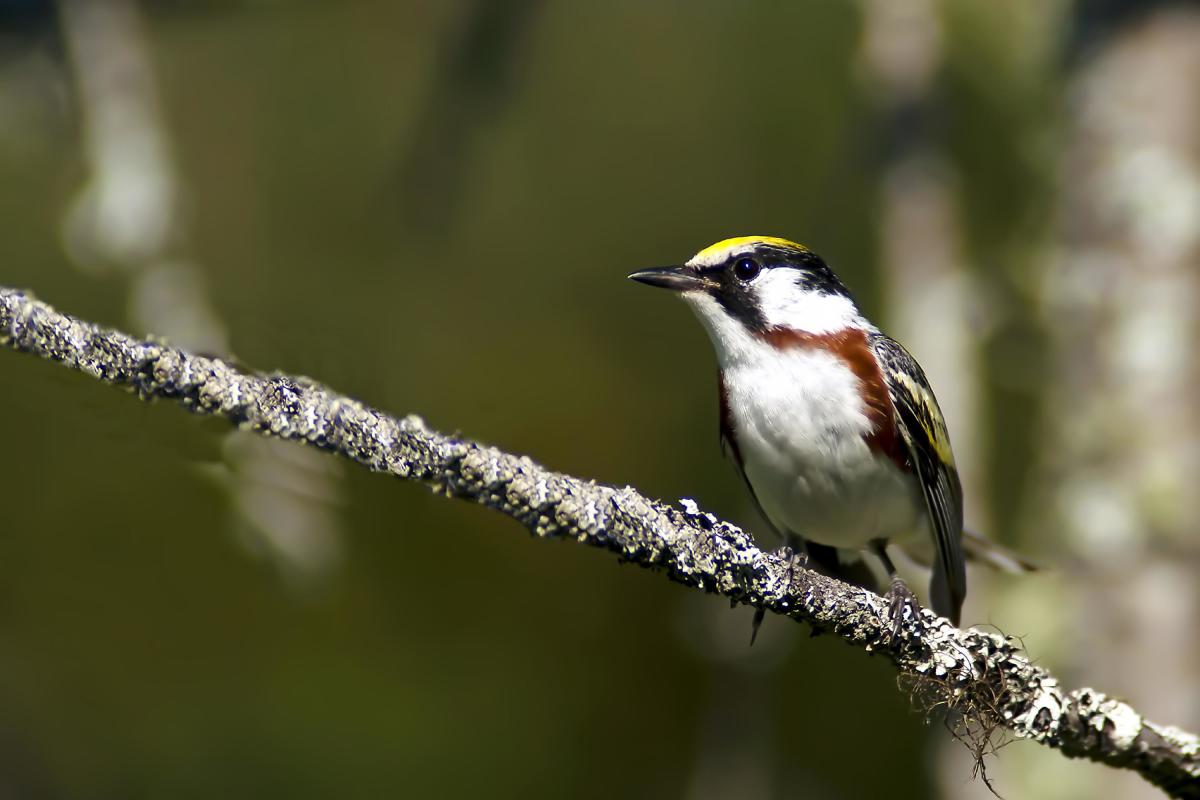
 On an autumn night in the Lowcountry, while most of us are asleep, an extraordinary migration is taking place overhead. Songbirds lift off after sunset and begin flying south, sometimes traveling hundreds of miles before dawn. They are navigating in near darkness and often using favorable winds to make a demanding journey a little easier. By morning, many of those birds have arrived in the trees and wetlands around us, searching for food and a place to rest. At the Caw Caw Interpretive Center in Ravenel, the arrival of fall means the beginning of one of the most fascinating times of year to be outside.
The scale of the migration is difficult to comprehend. Hundreds of millions of birds pass through South Carolina during the fall, which makes the Lowcountry not simply a place where birds happen to pass overhead, but an important stop along a much larger journey southward.
For Natural History Interpretation Coordinator Keith McCullough, that hidden migration becomes a visible reality as he searches for newly arrived migrants each fall. The timing varies by species, but September and October are significant migration periods.
“They'll especially utilize those nights where the winds are blowing from north to south to aid them so they have to expend less energy,” McCullough said. “Hawks and falcons tend to migrate during the day and can benefit from wind direction as well.
For the birds making that journey, arriving somewhere like the Caw Caw Interpretive Center or a backyard in the Lowcountry is about finding a quiet place to rest and enough food to continue.
“These birds, when they're migrating through, they’re looking for protein, looking to build fat that provides the energy to migrate,” McCullough said. “They're foraging pretty heavily for insects in a lot of cases, but many species eat berries and other fruit as well.”
That is where the diversity of the Caw Caw Interpretive Center becomes particularly important. It contains swamp, freshwater wetlands, brackish water wetlands, and several different forest types in a relatively compact area, allowing birds to find different kinds of food and shelter as they move through the Lowcountry.
“"We see many species that only pass through in migration, but many other species through the course of the season have individuals that stay to become winter residents,” McCullough said.
Chestnut-sided Warblers, for example, are typically only seen in our coastal areas during migration, while other species such as the Sharp-shinned Hawk have some of their migratory population that remain with us through the winter.
The mixture of travelers and winter residents is part of what makes a morning at Caw Caw so unpredictable. You might encounter a bird that will spend only a few hours or days in the area, or one that will become a familiar part of the Lowcountry landscape for the next several months. You might also see summer residents such as Painted Bunting that have not yet left the area for their wintering grounds further south.
McCullough has seen plenty of unusual birds during his years of watching migration, but some of his favorite memories have less to do with the bird itself than with the person who gets to see it.
“There are lots of rare things that I've seen and we're like, ‘wow, that was amazing to find and see,’” McCullough said. "But, the people who come and share their excitement about seeing a lifetime bird target is what I remember most. I can remember a particular group from California who came and said they had never seen a Palm Warbler, and there just happened to be huge group of them passing through that day," McCullough said.
There is also something remarkable about knowing what happened before that bird appeared in front of you.
“It’s just a glimpse into an unseen world,” McCullough said. “Consider a fragile little songbird migrating in the dark, in the sky while we're sleeping and communicating with other birds in the sky. They’re flying all night and then showing up in the shrubs or trees outside of our houses or at our parks and encountering that, laying our eyes on it when you know they’re only here for a small window every year. There’s some special adrenaline that comes with that.”
So this fall, go looking for the birds moving through our parks. Early morning bird walks at the Caw Caw Interpretive Center are an especially good place to start. Our naturalists can help visitors look and listen for the species making their way through the Lowcountry. Enrollment is required in advance, so plan ahead and reserve your spot. You may see a Yellow-bellied Sapsucker, a Kinglet, a Warbler, a Merlin, a Thrush or you may simply find yourself standing quietly beneath the trees, pondering the unseen aspects of migration that make the bird activity around you possible.